
In the huge system of industrial production, industrial sockets are like the key “bridge” connecting electricity and equipment. Compared with household sockets, they have stronger carrying capacity, higher safety and excellent durability, becoming the cornerstone for ensuring the stable operation of industrial equipment, and can calmly cope with various harsh industrial environments such as high temperature, humidity and dust.

The core advantages of industrial sockets
Industrial sockets are unique in their safety design. The rated voltage can be distinguished intuitively by the color of the shell: blue represents 220V, and red represents 380V. Operators can quickly identify and effectively avoid voltage misjudgment.
At the same time, industrial sockets of different specifications differ in diameter, number of poles and grounding contact positions, forming a unique “safety mark”. Only plugs of the same specifications can be successfully plugged in, eliminating the risk of mis-plugging from the root.
In terms of material and performance, the shells of industrial sockets are all made of high-quality engineering plastics, which are high in strength and impact-resistant, and are not easily damaged even if they fall or are stepped on. The rubber and plastic parts have excellent anti-aging properties and can adapt to various complex indoor and outdoor environments. They have excellent heat resistance and flame retardancy, and can effectively deal with high-temperature heating problems.
Various types, precise adaptation to needs
Industrial sockets are divided into 16A, 32A, 63A, 125A, 250A, 420A, etc. according to current specifications. Small electric tools have low power, so 16A sockets are sufficient; while large equipment such as machine tools and punching machines consume huge amounts of power during operation, and require sockets with 63A or even higher current specifications to ensure stable power supply and avoid accidents caused by current overload.
According to voltage specifications, common ones are 40V – 45V, 110V – 130V, 200V – 250V, 230V – 415V and 500V 690V, etc. The power standards and equipment rated voltages in different countries and regions are different and must be strictly matched. For example, some European equipment uses 230V – 415V voltage, and domestic industry commonly uses 380V, which corresponds to the red shell industrial socket. Otherwise, the equipment will not work properly or even be damaged.
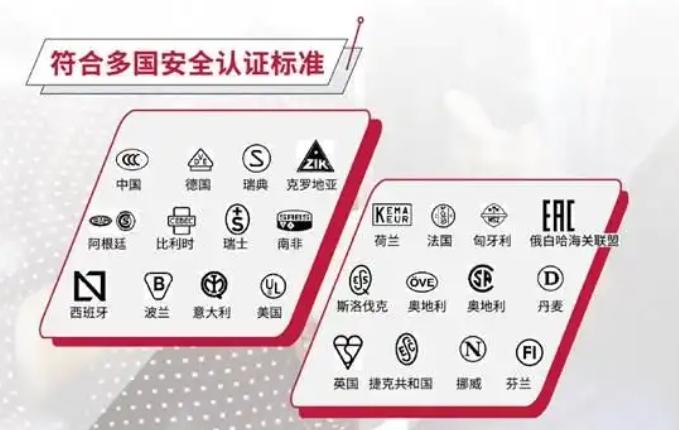
In terms of protection level, IP44 is suitable for general industrial environments and conventional outdoor places, and is dustproof and splashproof; IP66 is suitable for dusty or humid environments, and can effectively prevent the intrusion of dust and strong water spray; IP67 is used in humid environments such as ships and ports, as well as food processing, chemical workshops and other places with extremely high protection requirements, which can be completely dustproof and have excellent waterproof capabilities. Even in a humid, high-salt fog environment for a long time, it can still operate stably to ensure the power supply of the equipment.
In terms of installation method, the concealed type is embedded in the wall or structure, which is beautiful and does not take up space. It is suitable for places with high environmental requirements such as electronic production workshops; the exposed type is directly fixed on the wall, ground or production line, which is easy to install and maintain, and is often used in construction sites and factory workshops; the connector type can be flexibly moved, suitable for scenes such as computer rooms and factories that require flexible wiring, and convenient for temporary power supply of equipment.

Widely used in industrial scenarios
In the industrial field, industrial sockets are widely used and play a key role in many scenarios. Power tools such as electric drills and electric saws rely on industrial sockets to provide high current and high voltage to ensure efficient operation in operations such as metal processing and wood cutting.
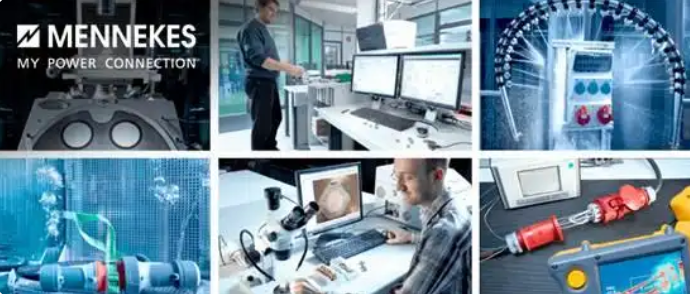
Large-scale machinery and equipment such as machine tools have extremely high requirements for power supply stability. Industrial sockets can ensure continuous and stable power supply, helping them to complete processing tasks with high precision. The production lines of many automobile manufacturers have selected Mennekes industrial sockets to provide stable power for precision machine tools and ensure high precision and consistency in parts processing.
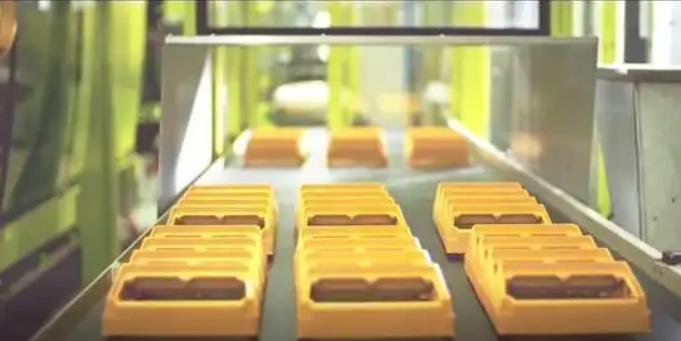
Industrial lighting equipment, such as high-power LED lights and high-pressure sodium lamps in factory workshops, warehouses, and parking lots, require stable power supply from industrial sockets to provide sufficient lighting, ensure safe production and work efficiency. In the lighting system of large logistics warehouses, industrial sockets provide stable power supply for high-power lighting equipment, ensuring sufficient light in the warehouse for easy storage and handling of goods.
With the development of new energy, electric forklifts, electric patrol cars, etc. are popular in the industrial field. Industrial sockets meet the high power requirements of their chargers, achieve fast charging, improve vehicle efficiency, and promote industrial green development. In the smart storage centers of some large e-commerce companies, industrial sockets provide support for the fast charging of electric forklifts, effectively improving the operating efficiency of warehousing and logistics.
In addition, in the power transmission system, industrial sockets connect generators, transformers, distribution boxes and other equipment, which is a key link in ensuring the smooth transmission and distribution of electricity.
The key to selecting industrial sockets
When choosing an industrial socket, first calculate the required current and voltage based on the power of the equipment. The rated current of the socket should be slightly larger than the actual working current of the equipment and strictly match the rated voltage of the equipment. Secondly, select the protection level according to the use environment.